A Digital Power Cut in the Heart of Conflict
In mid‑June 2025, amid a fresh wave of intensifying airstrikes, residents of Gaza woke to a crippling reality: their telecommunications networks had collapsed overnight. Central and southern regions lay almost entirely cut off from both internet and phone services, as if a dark hand had shuttered every connection. For civilians already grappling with the physical devastation wrought by war, this digital blackout dropped a chilling final blow: no calls could reach loved ones, no alerts could be dispatched, no lifelines remained intact.
What Triggered the Silence?
The collapse began when key fiber‑optic links—vital arteries feeding the region’s digital lifeblood—were severed amid the bombardment. As a UN diplomat recently revealed, this wasn’t a routine failure, but the destruction of “the last remaining communication cable” serving the southern territories. The result was catastrophic: entire networks plunged into darkness, mobile signal strength dwindled to barely functional, and the landscape of emergency response, humanitarian coordination, education, and financial systems was instantly fractured. The United Nations warned this collapse was paralyzing vital aid operations, severing any ability for responders to coordinate, communicate, or even know when lives were threatened.
The Human Toll: Trapped in Isolation
For Gazans, the blackout isn’t simply inconvenient—it’s deadly. In areas already devastated by bombardment and lacking water or electricity, the absence of communication means families cannot call rescuers, confirm evacuation routes, or learn when fresh strikes are incoming. In one harrowing example, a UN social worker described how field teams climbed onto rooftops—despite shells dropping nearby—just to send a single text that said, “We’re okay.” That brief beep of a message may have spared lives, but the isolation imposed by the blackout has made each day grueling.
Ambulances are now blind. Medical teams in hospitals that barely survived the earlier power outages are scrambling to respond to injuries, but without phone lines or data links, they are reduced to guesswork. When every second counts, a disconnected phone line means missing the difference between life and death.
Education and Finance: Crippled Sectors
Shuttered fintech platforms have turned Gaza’s fragile financial ecosystem into a wasteland. Online banking and mobile payment apps—lifelines amid cash shortages and crumbling storefronts—have come to a standstill. Merchants and aid agencies applaud mobile transfers as their only safe mode of commerce, yet now those have vanished just when flexibility was most essential.
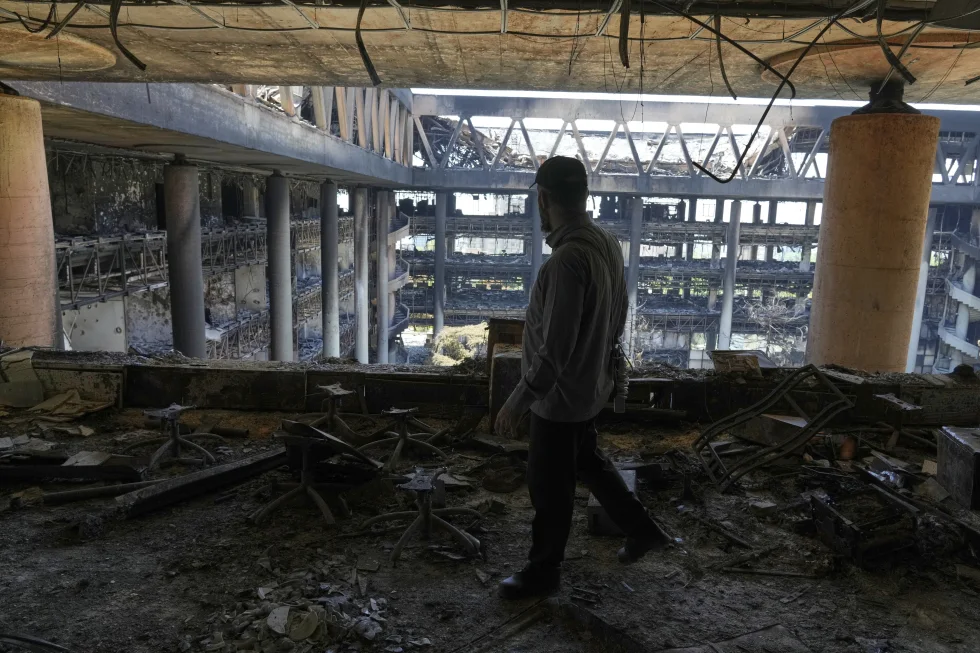
The halls of learning are silent too. Universities brimming with up to 75 percent structural damage had leaned on digital infrastructure to keep classrooms alive. With both buildings and connection gone, professors have abandoned syllabi and exams. For Gaza’s youth, already traumatized by explosions and displacement, the blackout has robbed them of another lifeline: education itself.
Emergency Aid: Paralyzed at the Crux
This is not a one‑off outage. It’s the tenth telecom breakdown since the war intensified in October 2023. Yet this one hits differently, because it coincides with a surge in hostilities and intensifies fuel shortages, making repairs nearly impossible. Humanitarian agencies now scramble for sporadic connection, using satellite phones or rare hotspots. But without dependable telecoms, they cannot verify deliveries, track lost responders, or coordinate life-saving aid.
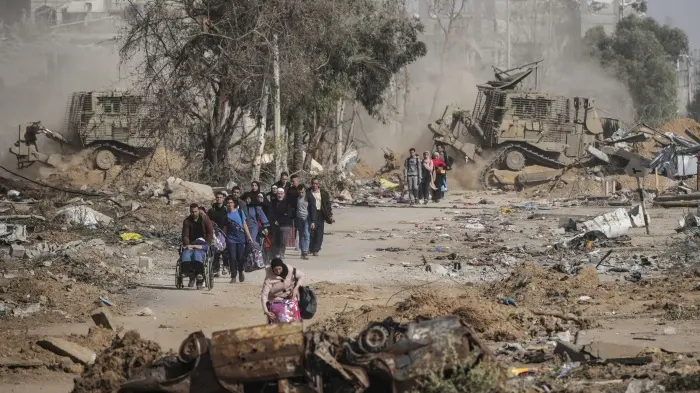
Pictures paint part of it: scenes captured across Gaza show medics stumbling through rubble, trying to assemble broken radios. In some cases, patients wait in silence because desperate staff cannot contact operating theaters. Hospitals once supported by diesel generators are now facing the twin threats of fuel depletion and severed communication ports.
A Systematic Weapon? Civilians Ask Why
As analysts weigh in, one view increasingly rings true: telecom infrastructure has become a weapon of war. Nine out of ten residents now live under a full or partial telecom freeze. This critical deprivation affects not just practical survival—but also civilian morale, psychological resilience, and a population’s very sense of agency.
On a cold rooftop, a Gazan mother described losing more than just connection: “When the towers went down, so did our hope.” That sense of universality became starkly real when UN observers spoke of the blackout at the helm of what they termed an “unprecedented communications collapse.”
For civil society organizations and advocacy groups, the optics are stunning. Severing commerce, mobility, and knowledge delivery feels less like collateral damage than intentional control—digital lockdowns used to suppress not just infrastructure, but also testimony, witness accounts, and civilian resilience.
Fuel Deprivation: A Second, Related Crisis
What makes this blackout harsher is its intersection with Gaza’s energy collapse. At least 90% of local electricity has been choked off due to fuel blockades and combat damage. The blackout of telecoms compounds the deprivation of power: radios, chargers, modems—all sit silent in the dark. Pumps falter, desalination stations falter, hospitals strain. There’s no energy to run diesel generators when connections fail—and no fuel to restart when they do.
Reconstruction Mired in Scarcity
Attempts to restore telecoms are moving at a snail’s pace, not for lack of will, but for lack of materials. Cable replacement, tower reconstruction, and power station repair all require steel, diesel, technical parts—all of which cannot enter Gaza amid ongoing blockades. Technical teams have reinstated partial service in pockets of Khan Younis, yet the threat of renewed strikes—and lack of replacement parts—keeps restoration efforts dangling by a thread.
Digital Inequality: e‑SIMs and Starlink Band‑Aids
In these pockets of darkness, some residents have turned to alternative solutions: eSIM cards from foreign carriers, smuggled satellite kits, and even clandestine Starlink terminals. For a few university labs and hospitals, these tools offer lifelines. Yet these tech escapes illustrate the inequality in innovation adoption: the affluent or the well-organized can scramble for connectivity, while the vast majority remain cut off, powerless, and left behind.
Cyber Echoes in the Physical War
Beyond bombs and fuel shortages, Gaza is now locked in a digital battleground. Cyberattacks target websites, servers, and databases that house everything from hospital records to NGO logistics. Hack-and-scrape campaigns compromise what little remains of local cyber defenses. While not as visible as missile strikes, these invisible skirmishes deepen a unified assault on Gaza’s infrastructure: physical, digital, and human.
A Global Outcry, But Limited Remedies
International condemnation has been swift. UN officials, aid workers, and human rights advocates have all called for unconditional access to repair communications networks. But no concrete mechanisms exist to enforce such demands. Israel maintains that communications assets can also be used for military coordination by militants. Meanwhile, Gazans, along with their families around the world, are left in anguish—struggling with uncertainty, under siege by silence.
The Psychological Dimension: Breaking Spirit
In Gaza’s homes, the blackout signals a deeper assault on hope and emotion. People describe a profound sense of disconnection, even disorientation. With external news channels dead, rumors and fear spiral unchecked. Parents cannot reassure children. Doctors cannot call for backup. Missing individuals simply vanish—no last-seen location, no emergency call, just silence.
What the World Needs to Learn
If telecoms are now battlefield assets, then protecting them must become a priority for global humanitarian law. Network infrastructure cannot be treated as fair game in war. Civilians require communication to save lives, to document atrocities, to call for peace. Without it, humanitarian corridors crumble; accountability evaporates.
How Connectivity Can Be Protected
In future conflicts, several measures are imperative: treating telecom towers as protected zones, guaranteeing humanitarian corridors for repair crews, stockpiling fuel and spare parts in neutral buffer zones, and empowering NGOs with sat-comm assets to bypass physical network failures. Technology must be a bridge to survival, not a dictated choke point.
Gaza’s Uncertain Future
As of June 21, the blackout remains unresolved. Network nodes flicker with partial service; technicians work under duress; humanitarian agencies scramble to deliver aid. But even restored cables cannot heal the fractures left in civic infrastructure, economic systems, and social fabric.
Once rebuilt, telecom systems in Gaza must be more resilient, protected by international frameworks and citizen advocates. Today’s lesson is stark: in modern war, connectivity is the thread that holds society together. If that thread is cut, people unravel—not in statistics, but in fear, in shattered daily life, in erased human presence.
Voices from the Ground
“Every day without connection is a day we lose a piece of humanity.” A local teacher, speaking via a satellite phone, described her classroom’s emptiness, once alive with digital lessons, now silent and dark.
A hospital administrator spoke of \patients lost because we couldn’t call ambulance teams.\ In the same breath, a humanitarian worker described solo missions crossing bombed-out districts just to send a single verification text.
These are not abstract losses—they are casualties of a war on communication itself. Each message un-sent becomes a life un-saved.
The Path Ahead
Reconstruction will come. But rebuilding towers, cabling, and servers is not enough. Gaza must emerge with a networked resilience—satellite backup, multipath connections, emergency mesh networks that do not depend on single cables. Preventative planning, stockpiles, trained rapid-response telecom teams—all must be embedded in future humanitarian protocols.
In wars yet ahead, no civilian community should face such isolation again.
Final Thoughts: Connectivity as a Civil Right
In Gaza today, telecom disruption means death—of services, of trust, of collective memory. Silence is no longer just golden; it’s weaponized, deliberate, systemic.
















Comments 0