How online communities save transgender youth from isolation
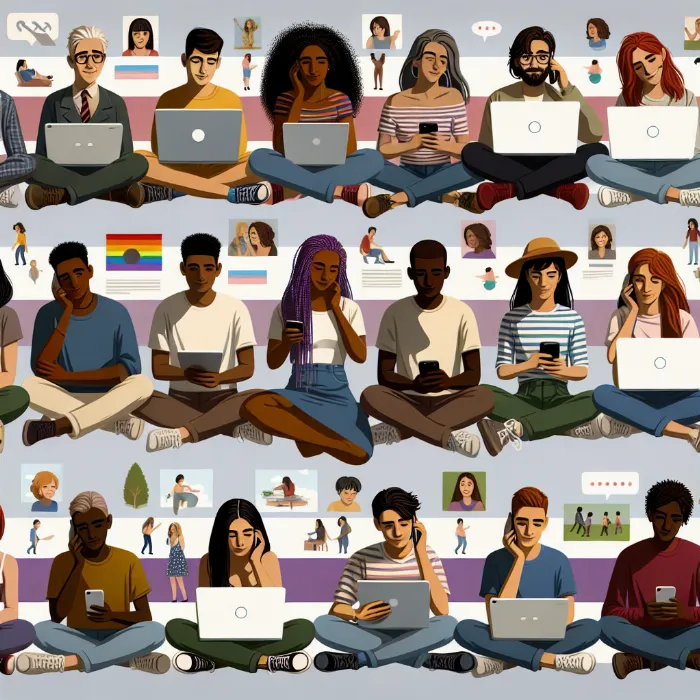
Across the United States, transgender and gender-diverse young people face high rates of stigma, rejection and mental-health challenges. In the absence of affirming local resources, many are turning to online spaces for connection, information and safety. Participants and researchers say those communities can be lifesaving — offering social acceptance, peer mentoring and access to crisis resources — even as experts warn about risks including harassment, misinformation and uneven moderation.
Rising needs, limited local supports
National surveys over recent years have documented persistent and, in some populations, rising mental-health needs among LGBTQ youth. The Trevor Project, a national suicide prevention and crisis intervention organization for LGBTQ young people, has found elevated rates of depression, self-harm and suicide attempts among transgender and nonbinary youth compared with their cisgender peers. The organization’s annual national survey provides regularly updated data and analysis about these trends and the role of support systems in mitigating risk (The Trevor Project, 2023).
Public health data also indicate disparities. The Centers for Disease Control and Prevention’s Youth Risk Behavior Surveillance System has documented higher prevalence of suicidal thoughts and attempts among youth who identify as sexual or gender minorities in jurisdictions that include the relevant questions (CDC YRBS).
At the same time, access to gender-affirming care and supportive school policies varies widely by state and locality. Major medical organizations, including the American Academy of Pediatrics, the American Psychiatric Association and the Endocrine Society, characterize gender-affirming care as essential for many transgender youth and recommend clinical and social supports that affirm a young person’s gender identity (American Academy of Pediatrics policy statement).
Where families, local providers and schools do not provide affirmation or access to care, young people often report feeling isolated. That isolation is what many online communities are attempting to address.
Why online communities matter
Online communities — including moderated forums, social media groups, Discord servers, dedicated apps and platforms operated by nonprofit organizations — serve multiple functions for transgender youth:
- Peer support and identity affirmation: Youth can find others with similar experiences, helping to reduce loneliness and validate gender identity.
- Information and navigation: Communities share resources about mental-health services, legal rights, local support groups and gender-affirming care pathways.
- Crisis connection and referral: Some platforms link directly to crisis hotlines or trained volunteers who can provide immediate assistance and referrals.
- Skill-building and advocacy: Spaces often host discussions about coming out, family conversations, school accommodations and civic engagement.
Researchers studying online social networks say these virtual ties can be especially important for youth who are geographically isolated or who live in communities with few LGBTQ-specific resources. "For many young people, the internet is not just a convenience — it’s their first and sometimes only place to find others who understand them," said Dr. Jack Turban, a researcher focusing on transgender youth mental health at the University of California, San Francisco. Turban’s work has documented associations between social support, access to gender-affirming medical care and mental-health outcomes among transgender youth (UCSF profile — Jack Turban).
Evidence of benefit
Empirical studies and program evaluations indicate that social support — including that received online — is associated with reduced depressive symptoms and suicidality among transgender youth. The Trevor Project’s research highlights that LGBTQ youth who reported higher levels of support from family, friends and community were less likely to attempt suicide (Trevor Project research).
Additional peer-reviewed literature suggests that access to community and identity-affirming information can buffer stressors linked to gender minority status. These findings mirror broader evidence that social connectedness is a protective factor for adolescent mental health.
Stories from the platforms
Participants in online communities describe immediate, practical ways those spaces help. Common themes include the relief of finding peers who use the same name and pronouns, learning about local clinicians and legal resources, and receiving emotional support during family or school conflicts.
Moderated spaces run by nonprofits and community organizations can also provide structured mentorship, help youth connect to local allies and refer them to licensed therapists when appropriate. Larger platforms such as TikTok, Reddit and Discord host both organized communities and ad hoc peer groups; smaller, moderated forums and nonprofit platforms sometimes offer higher levels of safety and targeted resources.
Platform features that help
- Active moderation and community guidelines that prohibit harassment and misgendering.
- Trained volunteer moderators or peers who can de-escalate crises and link users to professional help.
- Clear pathways to crisis resources, including hotlines, text lines and local emergency services.
- Privacy tools that allow youth to control who sees their identity and activity.
Risks and limitations
Although online communities can be protective, experts caution they are not a substitute for comprehensive care. Risks include exposure to harassment, targeted disinformation, predatory behavior and unmoderated medical advice. Content that stigmatizes or invalidates gender-diverse identities can exacerbate distress for vulnerable youth.
Moderation quality varies widely across platforms. Social media spaces with lax moderation can become hostile environments; conversely, heavily moderated spaces sometimes struggle to scale while maintaining safety. Privacy concerns are also significant: not all platforms reliably protect the identities of young users, which can expose them to risks if family or school authorities access their accounts.
Dr. Amanda Pollitt, a clinical psychologist with experience in adolescent and LGBTQ mental health, cautions that while peer support is invaluable, it must be paired with access to trained mental-health professionals and, where appropriate, gender-affirming medical care. "Peer support can reduce isolation and provide practical advice, but clinicians bring an evidence-based framework for managing risk and coordinating care," Pollitt said in a panel discussion hosted by a national mental-health organization (American Psychological Association).
How organizations are responding
Several national organizations have expanded digital services to meet youth where they are:
- The Trevor Project operates both a 24/7 lifeline and text/chat services for LGBTQ youth, and it publishes research about youth needs and service usage (The Trevor Project).
- GLSEN provides resources for schools and students to create safer education environments and conducts research on school climate (GLSEN).
- Local LGBTQ centers and nonprofit groups run moderated chat rooms, mentorship programs and referral networks tailored to regional needs.
These organizations emphasize training for moderators and volunteers, partnerships with licensed clinicians, and systems to escalate urgent situations to professional crisis services. They also engage in outreach to ensure underserved populations — including rural youth and youth of color — can access digital supports.
Policy and platform responses
Tech platforms have implemented a range of policies intended to reduce harm. Some have tightened rules around harassment and misinformation; others have introduced privacy controls and reporting mechanisms designed to protect minors. Advocacy groups continue to press platforms to improve moderation practices and increase investment in safety teams that understand LGBTQ-specific dynamics.
At the same time, legal and political debates over transgender rights, particularly in education and health care, shape the broader environment in which online communities operate. Changes in state laws and school policies can influence whether young people feel able to seek help locally, increasing reliance on virtual spaces.
Balancing access and safety: best practices
Based on program evaluations and expert recommendations, effective online support for transgender youth typically includes the following elements:
- Clear community standards that explicitly protect gender-diverse users and prohibit misgendering, doxxing and targeted harassment.
- Active, trained moderation that can identify and address harassment, grooming behavior and self-harm indicators.
- Integration with crisis-response services and mental-health professionals for escalation beyond peer support.
- Privacy features that give youth control over their visibility and personal data.
- Education and resource directories vetted by clinicians and community organizations.
Experts say platforms and community organizers should also prioritize culturally competent training for moderators and volunteers to ensure intersectional needs — such as experiences related to race, disability or immigration status — are addressed.
Voices from youth
For many young people, the difference between finding an online community and remaining isolated is life-changing. Participants report emotional relief in finding peers who use their chosen name and pronouns, and practical gains such as referrals to supportive therapists or local groups.
Those testimonials align with research showing that feeling accepted by at least one supportive adult or peer is a strong protective factor against suicide and other negative outcomes. Community-based interventions that amplify those connections can therefore play an important role in comprehensive prevention strategies.
Where gaps remain
Even with expanded online support, major gaps remain in the broader system of care. Access to licensed mental-health providers with experience in gender-affirming care is uneven, especially in rural areas. Insurance coverage for mental-health and gender-affirming services varies by state and insurer. Family rejection and hostile school environments remain significant drivers of poor outcomes.
Improving outcomes for transgender youth therefore requires coordinated action across multiple sectors: improved access to in-person clinical services, stronger legal protections, safer school policies and ongoing investment in digital community supports.
What researchers want to study next
Scholars working on adolescent mental health and digital communities are pursuing several research priorities:
- Measuring the causal impact of online peer support on clinical outcomes, including depression and suicidality.
- Identifying effective moderation strategies that can scale while preserving privacy and inclusion.
- Developing clinical pathways that integrate peer-led online supports with professional care and crisis services.
- Examining how intersecting identities (race, socioeconomic status, disability) shape experiences in online communities.
Such work aims to help policymakers, platforms and health providers optimize digital spaces as part of broader prevention and care systems.
Conclusion
For many transgender and gender-diverse youth, online communities provide a vital lifeline: social acceptance, practical help and pathways to crisis resources that may be unavailable locally. Evidence and expert opinion suggest these spaces can reduce isolation and support mental health, particularly when they are well-moderated and connected to professional services. At the same time, online supports are not a substitute for comprehensive, in-person medical and mental-health care, nor for family and school acceptance.
Efforts to expand and improve online communities — including better moderation, privacy protections and stronger links to licensed clinicians and crisis services — are an important component of a broader public-health strategy to support transgender youth. To achieve durable improvements in wellbeing, digital supports must be paired with policies that increase access to gender-affirming care, protect youth from discrimination and strengthen local systems of care.
Disclaimer: This article is based on publicly available information and does not represent investment or legal advice.

















Comments 0