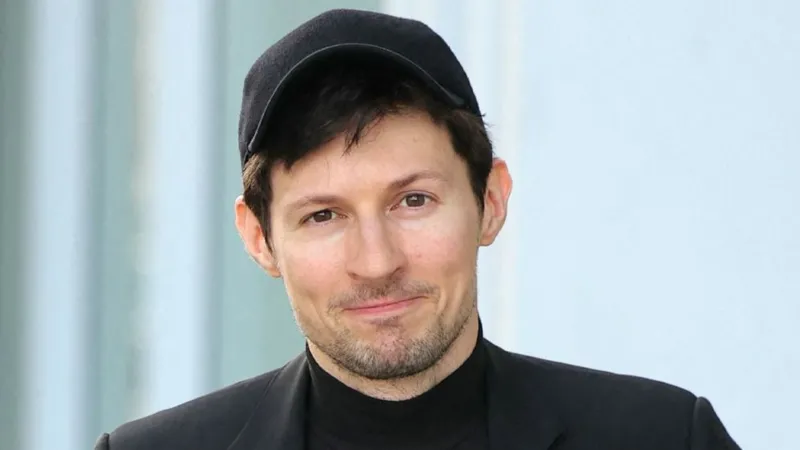
Telegram founder and CEO Pavel Durov, with a net worth of around $17–$14 billion, has announced in a recent interview that he plans to divide his wealth equally among over 100 children—six biological and the rest from anonymous sperm donations. The inheritance will be released 30 years after his death, emphasizing his wish for his offspring to grow independently and avoid entitlement conflicts.
In a revelation that feels stranger than fiction but is entirely true, Telegram founder Pavel Durov has announced plans to leave his massive fortune—estimated between $14 billion and $17 billion—to more than 100 children that he has fathered. This includes both biological children and those conceived through anonymous sperm donations over the last 15 years.
It’s a story that has captivated global headlines, mixing elements of wealth, ethics, legacy, and human connection in a way few tech figures have done before.
👶 The DNA Trail: A Life of Anonymous Donations
According to Durov, his unusual journey into fatherhood began over a decade ago when a close friend asked for his help in conceiving a child. That request led him to a fertility clinic, and from there, the journey accelerated. Clinic staff praised his “elite genetic profile”, encouraging him to donate anonymously to help others conceive.
He agreed and continued doing so across dozens of clinics in multiple countries. Today, it is believed that Pavel Durov has fathered over 100 children, many of whom have never met him—and may not even know of their genetic connection.
🏦 Equal Inheritance For All
In his formal last will and testament, Durov has outlined a bold directive: all of his children—regardless of how they were conceived—will receive equal portions of his wealth. This means that each child will receive an identical share, reflecting Durov’s firm belief in fairness, equality, and personal independence.
He has also explicitly rejected any favoritism or hierarchy based on parental relationships. Whether they were born through relationships, partnerships, or anonymous donation, every child is “a rightful heir” in his eyes.
⏳ Not Yet, Kids — The 30-Year Lock
There’s a twist: the money won’t be available immediately. In what he describes as an ethical safeguard, Durov’s will stipulates that the inheritance will be released 30 years after his death.
His reasoning is philosophical: he wants his children to live without the weight or temptation of wealth, to discover their own purpose, and to build character without dependency.
He believes that inherited wealth at a young age leads to entitlement and disconnection from reality. By delaying the distribution, he hopes to nurture self-made individuals who later receive his legacy as a bonus—not a foundation.
📊 How Much Will Each Child Receive?
If Durov’s net worth stands at $15 billion, and assuming exactly 106 children, each child would inherit roughly $141 million, adjusted for taxes and fees.
Even if the number reaches 120, each child would still receive over $120 million—a staggering amount, and certainly one of the largest group inheritances in tech history.
🔐 Why He’s Doing This: Legacy Under Threat
Durov has spoken openly about the motivations behind his actions. In recent years, he’s faced increased legal pressure, including allegations from governments in Europe over Telegram’s role in moderating extremist content.
He says he is “constantly under threat” and that this plan is about protecting his legacy, his children, and the values he’s spent his life building.
Durov has been a fierce advocate of digital privacy, decentralization, and civil liberty, and he doesn’t want his life’s work to end up tangled in lawsuits or corporate takeovers.
🤖 A Very Modern Fatherhood
Durov’s announcement has reignited debates around modern family structures, bioethics, and the emotional role of fatherhood. Critics argue that anonymity can lead to identity confusion or emotional detachment. Supporters say that his actions represent a new kind of legacy—one grounded in genetic contribution and financial empowerment, rather than tradition.
When asked if he regrets not being in the lives of all these children, Durov responded that his will ensures they’ll know he cared enough to give them all an equal chance.
🧠 What It Means for the Tech World
This announcement comes at a time when tech billionaires are reshaping philanthropy and legacy planning. While figures like Bill Gates and Warren Buffett have opted to donate most of their wealth, Durov has chosen to privately empower the next generation of his bloodline.
He calls it “distributed legacy building” and insists it’s a more honest way to give back—by giving the gift of resources and freedom, not control.
🗺️ Global Implications
Durov’s children are likely scattered across multiple continents, born into different families, cultures, and languages. Connecting them all—if they even choose to connect—could result in a global web of Durov heirs, united not by upbringing, but by a shared history and sudden fortune.
Legal experts say that carrying out this inheritance will be immensely complex, involving international law, privacy rights, and estate management across jurisdictions.
📣 Final Thought: Legacy in the Age of Algorithms
Pavel Durov’s inheritance decision doesn’t just reflect personal choice—it’s a symbol of our times. In a world driven by tech, anonymity, and borderless interaction, Durov has created a legacy that is part Silicon Valley saga, part global social experiment.
Whether it will inspire a new model for legacy planning or remain an extraordinary one-off, only time will tell. But one thing is certain: few stories in the tech world combine human intimacy and futuristic philosophy quite like this.











Comments 0