Overview
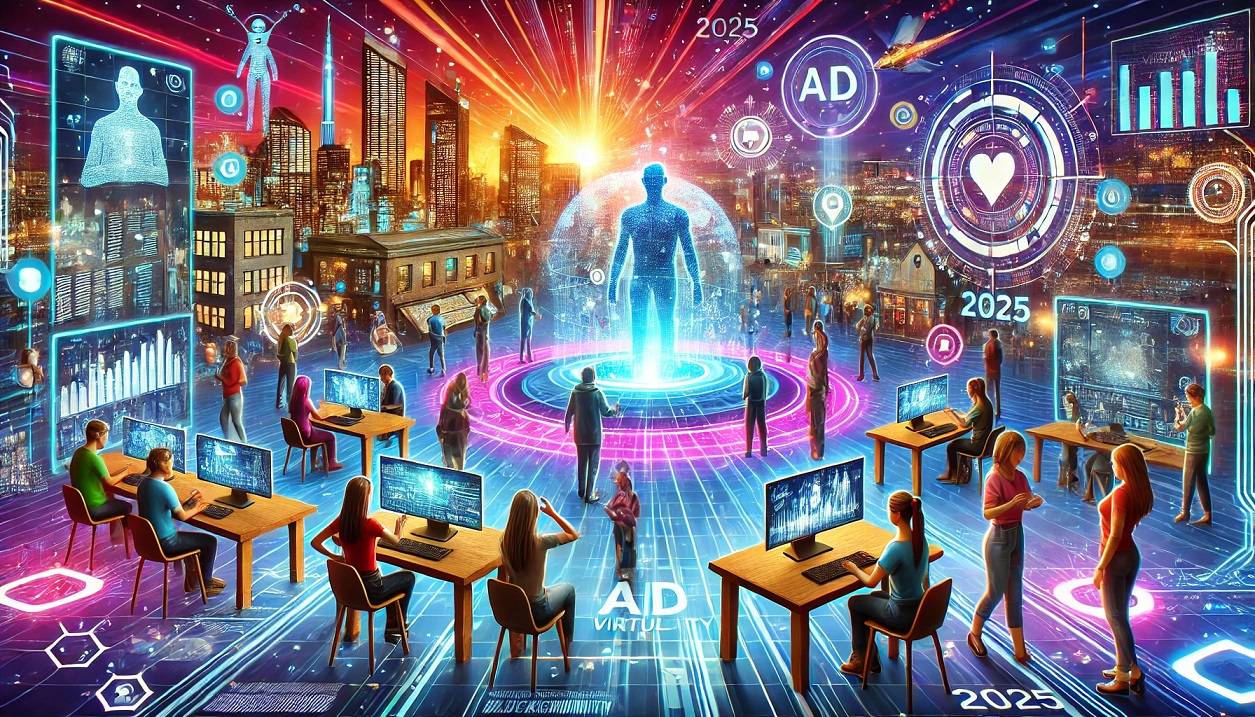
A research team at the University of Nebraska–Lincoln (UNL) has created an extended reality (XR) experience intended to illustrate the complex interconnections that shape biological, environmental and social life. The project uses immersive technologies—combining elements of virtual reality (VR), augmented reality (AR) and interactive media—to translate data, narratives and systems thinking into a spatial experience for users.
What the Project Does
The UNL XR project seeks to make abstract systems tangible by placing users within layered, data-driven environments. Participants move through scenarios that link ecological processes, human activities and temporal change, with the aim of fostering a visceral understanding of interdependence across scales.
According to the university news release announcing the project, the team drew on expertise from across disciplines including ecology, design, computer science and media studies to develop both the concept and the technological implementation. The release describes an experience that combines interactive visualization, 3D modeling, environmental soundscapes and narrative prompts to encourage reflection and learning. For more information from the source, see the University of Nebraska–Lincoln announcement: University of Nebraska–Lincoln Newsroom.
Background and Rationale
Extended reality is increasingly used in research and public engagement to represent systems that are difficult to grasp through text or 2D graphics. Proponents argue that immersive experiences can accelerate comprehension of complexity by capitalizing on spatial cognition and embodied interaction. The UNL project situates itself within this trend, aiming to bring systems thinking to broader audiences.
Interest in XR in academic and cultural institutions has surged over the last decade. Market research firms estimate global spending on AR/VR/XR hardware and software continues to grow, driven by enterprise and education adoption as well as entertainment. For example, industry forecasts from research firms such as IDC have repeatedly projected rising investment in immersive platforms; for broader public attitudes and adoption patterns, see resources from the Pew Research Center on emerging technologies and public understanding (Pew Research Center).
Interdisciplinary Collaboration
The UNL team represents a cross-disciplinary collaboration, a common model for XR projects that aim to translate domain-specific knowledge into interactive experiences. Key components of such collaborations typically include:
- Domain experts (ecologists, social scientists) who identify the scientific narratives and data to be visualized;
- Designers and storytellers who structure the narrative flow and user experience;
- Technologists (programmers, 3D modelers) who build the application and optimize performance across devices;
- Evaluation specialists who measure learning outcomes and user experience.
Multidisciplinary teams are intended to ensure that an XR experience is scientifically robust, pedagogically effective and technologically feasible. UNL’s project follows this model and highlights how campus resources—from research labs to digital scholarship centers—can be marshaled for public-facing projects.
Technical Approach and Platforms
The University of Nebraska–Lincoln team built the experience using a combination of 3D rendering, interactive data visualization and sound design. While specific technical stacks vary by project, XR developers commonly use engines such as Unity or Unreal Engine for 3D rendering and cross-platform deployment, and standards such as OpenXR to support multiple hardware devices. The project announcement notes that the team optimized assets for both tethered head-mounted displays and less immersive deployments, allowing broader access beyond users with high-end VR rigs.
Key technical choices for projects of this type typically include:
- Choice of rendering engine (Unity, Unreal) for cross-platform builds;
- Data-pipeline design to move scientific datasets into real-time environments;
- Optimization for performance to maintain frame rates required for comfortable immersion;
- Accessibility considerations (alternate interaction models, captioning, and 2D equivalents for users without XR hardware).
Research Goals and Evaluation
XR projects that aim to educate or change perceptions should include evaluation plans to assess effectiveness. The UNL team’s stated goals include:
- Promoting systems-level thinking about ecological and social processes;
- Increasing public engagement with scientific data;
- Exploring new modes of storytelling that link personal experience to global processes.
To measure outcomes, researchers frequently combine qualitative and quantitative methods such as pre/post surveys, task-based assessments, behavioral logging within the experience (e.g., time spent on prompts, navigation choices), and follow-up interviews. These measures help determine whether the XR intervention improves understanding, alters attitudes or motivates behavior changes.
Expert Perspectives
Immersive technology researchers emphasize that XR’s value lies not in novelty alone but in its capacity to represent relationships and scale in ways that are difficult in other media.
“Immersive media can make complex relationships legible by aligning spatial metaphors with conceptual structures,†said researchers in the project announcement summarizing the team’s intent. The UNL newsroom piece quotes project members describing their motivation to bridge disciplinary gaps and engage community stakeholders through tangible experiences. Read the original UNL announcement for direct statements and project details: Nebraska team creates XR experience to reveal life’s interconnections — UNL News.
External experts agree that immersive tools can be effective when grounded in pedagogical theory and rigorous evaluation. Jeremy Bailenson, founding director of the Virtual Human Interaction Lab at Stanford University, has written and spoken extensively about how virtual experiences can promote empathy and learning when designed with behavioral goals in mind. For broader context on the science of immersive learning, see Bailenson’s work and publications at Stanford’s VHIL: Virtual Human Interaction Lab.
Context: Why Visualize Interconnections?
Many contemporary challenges—from climate change to public health—are characterized by cross-scale interactions among natural and human systems. Visualizing these interconnections can support:
- Public understanding of systemic causes and effects;
- Educational interventions that teach systems thinking;
- Improved communication between scientists, policymakers and communities;
- Design of more resilient management strategies by illuminating trade-offs and feedback loops.
XR experiences offer unique affordances for representing time, scale and uncertainty. For instance, immersive narratives can depict temporal change (e.g., seasonal cycles, land-use transformations) and allow users to inhabit different vantage points—from microscopic to landscape scales—within the same environment.
Potential Applications and Audiences
XR projects like the UNL experience can be oriented toward a range of audiences and applications:
- Education: K–12 and university curricula that aim to teach systems thinking and environmental literacy;
- Public exhibits: Museums and outreach centers using immersive media to engage visitors in complex topics;
- Stakeholder engagement: Facilitating deliberations among communities, land managers and decision-makers by providing a shared visual language;
- Scientific communication: Supplementing publications and presentations with interactive demonstrations of model outputs and data-driven scenarios.
Making XR content accessible to these audiences often requires tailoring the experience for different platforms and designing complementary resources such as facilitator guides or 2D materials for classrooms.
Challenges and Limitations
Despite promise, XR-based approaches face practical and conceptual challenges:
- Access and equity: High-quality immersive hardware remains cost-prohibitive for many institutions and communities. Projects must plan for lower-tech alternatives or touring setups to broaden access.
- Evaluation complexity: Measuring learning and long-term behavior change attributable to an XR intervention requires careful study design and often longitudinal follow-up.
- Production costs and maintenance: Developing polished, scientifically accurate XR content can be resource-intensive, and software requires ongoing updates to remain compatible with evolving platforms.
- Over-simplification risks: Translating complex systems into digestible experiences may inadvertently obscure uncertainty or important caveats unless designers work closely with domain experts.
The UNL team acknowledged some of these constraints and designed the project to be modular and adaptable, allowing future iterations that address accessibility and scalability.
Funding, Partnerships and Institutional Support
Cross-disciplinary XR projects typically rely on a mix of institutional support, grants and external partnerships. Universities often fund pilot stages through internal grants, seed funds or digital humanities initiatives, and later seek external funding from agencies such as the National Science Foundation (NSF), National Endowment for the Humanities (NEH) or private foundations for broader deployment and evaluation.
University press materials indicate that UNL leveraged campus facilities and collaborators to prototype the XR experience, and that the team intends to pursue further development and public deployments. For models of institutional support and funding landscape discussions, see agencies such as the National Science Foundation and the National Endowment for the Humanities, which have supported digital, interdisciplinary projects in the past.
Related Research and Evidence
Evidence for XR’s educational effectiveness is mixed and context-dependent. Systematic reviews of immersive learning studies show promising gains in engagement and conceptual understanding in some domains, but results vary with study design and intervention quality. For example, meta-analyses in recent years have noted that immersive environments can improve spatial understanding and retention when aligned with clear learning objectives and assessment strategies. For a broad look at the literature on VR and learning, consider reviews found through academic publishers and research groups such as the Virtual Human Interaction Lab (VHIL) and educational technology centers.
Next Steps and Future Directions
The UNL team has indicated plans to iterate on the XR experience, conduct formal evaluations with targeted audiences, and explore partnerships for broader deployment through museums, community centers and classrooms. Future versions may incorporate richer datasets, multi-user interactions, or networked experiences that enable collaborative exploration of complex systems.
Additionally, as hardware becomes more affordable and standards such as OpenXR mature, developers expect deployment barriers to fall. Continued investment in evaluation, accessibility and cross-disciplinary collaboration will be necessary to realize XR’s potential as a tool for systems thinking and public engagement.
Conclusion
The University of Nebraska–Lincoln’s XR project is a representative example of how universities are experimenting with immersive media to communicate complexity and foster systems thinking. By combining disciplinary expertise, interactive design and emerging technologies, the team has produced an experience intended to make interconnections visible and intelligible to public audiences. The project sits within a broader landscape of XR research and deployment that offers opportunities for education and engagement, along with challenges related to access, evaluation and sustainability.
As the UNL team moves forward, the effectiveness of the experience will depend on rigorous evaluation, thoughtful iteration and strategies to expand access beyond early adopters. The project highlights both the promise and the practical considerations of using XR to translate scientific knowledge into experiences that invite reflection, dialogue and, potentially, action.
Disclaimer: This article is based on publicly available information and does not represent investment or legal advice.












Comments 0