Introduction
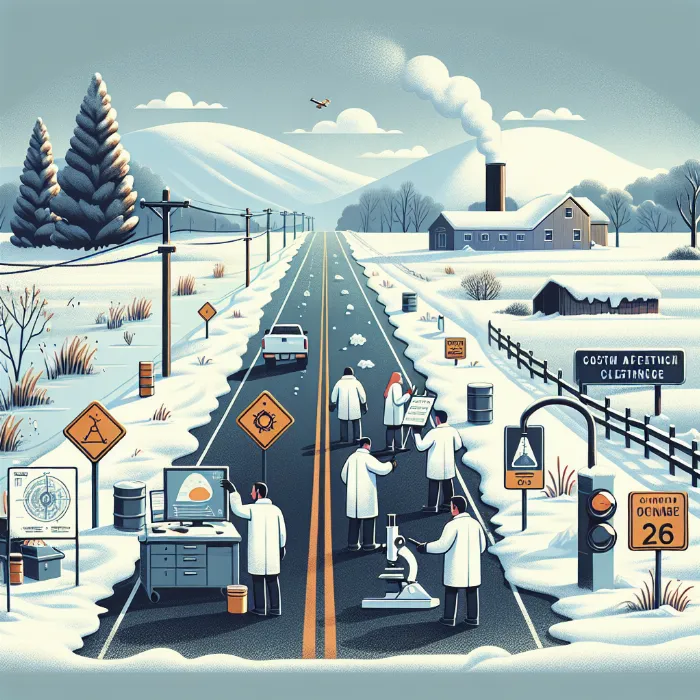
Missouri University of Science and Technology (Missouri S&T) has received a grant to test winter road treatments in field conditions, a development reported by local media. The project is expected to evaluate how different chemical and physical treatments perform under Missouri winter conditions, with the stated goals of improving roadway safety, reducing costs and minimizing environmental impacts. The award marks a continued emphasis by universities and state departments of transportation on evidence-based approaches to winter maintenance.
What the Announcement Says
Local broadcaster KRCG-TV reported that Missouri S&T received funding to carry out trials of winter road treatments. The report identified the university as the recipient and described plans to test treatments on public roads and in controlled environments to gather comparative performance data. For the original local coverage, see the KRCG website: KRCG-TV.
Scope and objectives (reported)
- Compare efficacy of common deicing agents and anti-icing strategies under real-world winter conditions;
- Measure impacts on surface friction and resulting vehicle stopping distances;
- Quantify environmental metrics such as chloride runoff, roadside vegetation exposure and potential groundwater effects;
- Assess cost-effectiveness, including material costs, labor and equipment wear.
The university will reportedly coordinate with state transportation officials to conduct on-road trials and data collection. Missouri S&T's research arm and faculty with transportation and environmental expertise are positioned to combine laboratory analysis with field monitoring.
Background: Winter Road Treatments and Why They Matter
Winter road maintenance typically relies on a mix of mechanical and chemical strategies designed to keep surfaces clear of snow and ice and to maintain vehicle traction. Common elements include plowing, spreading abrasives such as sand, and applying chemical deicers or anti-icing fluids.
Common chemical and physical treatments
- Sodium chloride (rock salt): Widely used because it is inexpensive and effective down to certain temperatures; has known environmental consequences when it enters soils and waterways.
- Calcium chloride and magnesium chloride: More effective at lower temperatures and hygroscopic (attract moisture), often used in liquid brine form.
- Calcium magnesium acetate (CMA): Less corrosive and less harmful to vegetation and aquatic systems, but considerably more expensive.
- Liquid brines and pre-wetting: Anti-icing approaches that apply solutions before or during storms to prevent bond formation between ice and pavement.
- Abrasives (sand): Improve traction without chemically altering freeze points, but can create maintenance burdens and water-quality issues due to sediment.
Each approach has trade-offs across effectiveness, cost, corrosion to infrastructure and vehicles, and environmental impacts. Decisions by state and local agencies are informed by climatic conditions, traffic volumes, available budgets and environmental priorities.
Public Safety and Economic Stakes
Winter weather events pose a measurable risk to mobility and safety. Weather-related crashes, delays and road closures produce direct economic costs and broader productivity losses. Transportation agencies prioritize treatments that reduce crash risk and maintain reliable mobility for emergency services, commerce and daily travel.
Federal and state transportation agencies collect and publish data on crash risk linked to adverse weather. The U.S. Department of Transportation and related agencies emphasize that timely and effective winter maintenance reduces crashes and can lower life-cycle costs by avoiding repeated icy conditions or accelerated pavement damage.
For broader national context, federal sources and research consortia such as the Clear Roads program and the Federal Highway Administration (FHWA) publish guidance and research on winter maintenance best practices: FHWA Operations.
Environmental and Infrastructure Concerns
Widespread use of salts and brines has raised questions about environmental impacts. Road salts contribute chloride loading to soils and surface waters, can increase corrosion rates for bridges and vehicles, and can damage roadside vegetation. Groundwater salinization in areas with heavy winter salting has been documented by hydrology researchers and agencies such as the U.S. Geological Survey (USGS).
USGS studies have shown chloride concentrations in streams and aquifers increasing in some regions because of road salt application, particularly in areas with intensive winter maintenance and limited dilution: U.S. Geological Survey. Transportation agencies face the challenge of balancing public safety with long-term environmental stewardship and infrastructure preservation.
Research Questions the Missouri S&T Project May Address
Although local reports focus on the grant award and general plans, the types of questions such a study could answer are well-defined in winter maintenance research:
- Which chemical formulations provide the most rapid and durable reduction in surface ice under typical Missouri winter temperatures?
- How do liquid anti-icing applications compare with solid spreads in terms of preventing bond formation and improving friction?
- What are the environmental transport pathways and fate of applied chemicals at the roadside—how much becomes runoff, how much infiltrates soils, and what is the potential for groundwater impact?
- What are the real-world costs when factoring in material, application, vehicle and equipment corrosion, pavement life, and labor?
- How do treatment results vary with pavement type, traffic density, and storm type (freezing rain vs. snow vs. sleet)?
Methodologies Commonly Used in Comparable Studies
To produce policy-relevant results, researchers typically combine several methods:
- Controlled test sections: Designated roadway segments where different treatments are applied under monitored conditions.
- Instrumented pavement: Embedded sensors to measure surface temperature, pavement friction (skid resistance), and bond strength between ice and pavement.
- Environmental monitoring: Sampling roadside soils, surface waters and groundwater wells to quantify chemical concentrations and changes over time.
- Vehicle-based safety metrics: Using traffic data, crash statistics and simulated stopping-distance tests to estimate safety benefits.
- Life-cycle cost analysis: Incorporating direct costs (material, labor) and indirect costs (infrastructure deterioration, vehicle corrosion, environmental remediation).
Potential Partners and Stakeholders
Field-scale assessments of winter treatments typically involve collaboration across multiple entities:
- University researchers (for experiment design, instrumentation and analysis);
- State Departments of Transportation (for access to roads, operational coordination and adoption of findings);
- Local governments and municipalities (for smaller-scale urban testing and community impacts);
- Federal research programs and agencies (technical guidance, partial funding and nationwide dissemination);
- Equipment and material suppliers (for product samples and application technologies).
Missouri S&T has a history of infrastructure and transportation research, and the university website provides information about its research centers and prior projects: Missouri S&T.
Expert Perspectives
Experts in winter maintenance emphasize that evidence from field trials is essential to refine practice. A spokesperson for the Federal Highway Administration has summarized the broader rationale for research in this area: "Research into winter maintenance practices helps transportation agencies improve safety and reliability while managing environmental and fiscal impacts" (see FHWA operations and research resources: https://ops.fhwa.dot.gov).
Academic reviews and synthesis projects, such as those disseminated by Clear Roads and other pooled-fund programs, have noted that applying liquids before storms (anti-icing) can reduce the need for reactive salting and plowing in many situations, but site-specific trials are necessary because the optimal approach depends on local pavement types, traffic volumes and storm characteristics: https://clearroads.org.
Environmental scientists point to monitoring and mitigation as integral to any large-scale program. The U.S. Geological Survey notes that chloride concentrations have been increasing in some streams and aquifers in cold-climate regions, and careful monitoring can detect trends and help design protective measures (USGS: https://www.usgs.gov/).
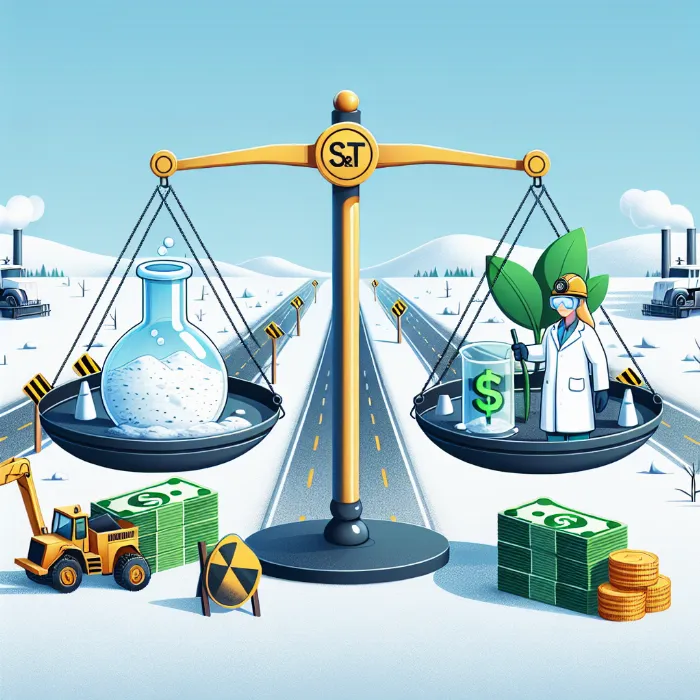
Costs: Budgetary and Lifecycle Considerations
Budgetary constraints drive winter maintenance decisions. While rock salt remains the least costly per ton, agencies must factor in long-term costs such as:
- Corrosion to bridges, guardrails, and vehicle fleets;
- Pavement deterioration and repair costs;
- Environmental remediation and impacts on water treatment systems;
- Operational costs tied to manpower, trucks and fuel for repeated applications.
Researchers performing life-cycle cost analyses typically include direct line-item expenses along with estimates for indirect costs. Results can shift decision-making—if a more expensive agent substantially reduces pavement damage or environmental harm, it may be cost-justified over a multi-year horizon.
Regulatory and Policy Context
State and local policies influence acceptable practices for winter maintenance. Some jurisdictions adopt municipal salt-management plans or best-management practices designed to minimize environmental harm while meeting safety objectives. Federal guidance and pooled research programs provide technical resources but decisions remain largely at the state and local levels.
Missouri's state transportation agency, the Missouri Department of Transportation (MoDOT), maintains guidance and operational standards for winter operations on state routes and collaborates with local agencies on techniques and training: MoDOT.
Potential Outcomes and Implementation Pathways
If the Missouri S&T study yields clear evidence of superior safety or environmental performance for particular treatments, state and local agencies could adopt those approaches through updated contracts, training and procurement. Possible implementation pathways include:
- Pilot expansion to multiple corridors with varying traffic and pavement characteristics;
- Updating state specifications for allowable deicing agents and concentrations;
- Investing in liquid brine application equipment or anti-icing sprayers where evidence supports benefits;
- Establishing roadside and watershed monitoring programs to track environmental metrics over time;
- Training and certification programs for winter maintenance crews based on trial outcomes.
Challenges and Limitations of Field Trials
Field research of winter treatments faces several practical constraints:
- Variability in weather: Winter storms vary widely in temperature, precipitation type and intensity, making controlled comparisons difficult without multi-season data.
- Traffic effects: Heavy traffic can affect how treatments perform or are displaced, requiring tests at multiple traffic levels.
- Measurement complexity: Accurately measuring environmental transport and subtle differences in friction demands precise instrumentation and sampling regimes.
- Scaling and transferability: Results from one geographic region or pavement type may not generalize to other contexts.
How Results Will Be Communicated
Research projects of this kind typically produce interim technical memoranda, final reports, peer-reviewed publications and presentations for practitioners. Findings are often disseminated through conferences, webinars and agency workshops so that practical recommendations can be adopted quickly by maintenance professionals. Stakeholder engagement—particularly with state and local agencies—is essential to ensure that results translate into operational change.
Where to Find More Information
Readers seeking deeper background can consult the following resources:
Implications for Road Users and Communities
For drivers and local communities, better data on winter treatments can mean safer roads and more consistent mobility during storms. If the research identifies practices that reduce ice formation with lower chloride loads or smaller environmental footprints, communities may experience improved roadside conditions and reduced maintenance burdens over time.
However, adoption of new practices often requires investments—new equipment, training and changes to procurement. The transition from research findings to routine use depends on demonstrated benefits and alignment with budgets and agency priorities.
Next Steps and Timeline
Precise timelines for fieldwork, analysis and reporting were not detailed in the initial local coverage. Typical field programs operate over multiple winter seasons to capture a range of storm types and to provide statistically robust comparisons. Stakeholder briefings, interim reports and final recommendations often appear in the year or two following project commencement, depending on funding and seasonal variability.
Conclusion
The grant awarded to Missouri University of Science and Technology to test winter road treatments reflects a broader, ongoing effort to apply rigorous, locally relevant research to the practical problems of winter maintenance. Field trials can produce the comparative evidence that transportation agencies need to select treatments that improve safety while controlling costs and reducing environmental harm. The final value of the project will depend on the quality of the experimental design, the representativeness of test conditions, and the extent to which findings are communicated and adopted by transportation practitioners.
Readers are encouraged to consult the original local coverage at KRCG-TV and to follow Missouri S&T and the Missouri Department of Transportation for updates as the project progresses.
Disclaimer: This article is based on publicly available information and does not represent investment or legal advice.














Comments 0