President Recep Tayyip Erdoğan said Türkiye is positioning to “move up to a higher league in science and technology.†This article examines the claim, outlining the country’s recent progress, structural challenges, policy measures, and the data and institutional landscape shaping Türkiye’s innovation trajectory.
Lede
President Recep Tayyip Erdoğan declared that Türkiye is set to "move up to a higher league in science and technology," a statement reported by Hürriyet Daily News that has renewed debate about the country’s ambitions in research, development and innovation. The comment comes as Ankara continues to emphasize technology-driven growth, high-tech exports and strategic autonomy in areas such as defense and space.
What ErdoÄŸan Said and Where
The statement, carried in national and international press, framed science and technology as priorities for economic transformation and national security. Hürriyet Daily News published coverage under the headline "Türkiye to move up to a higher league in science and technology: Erdoğan." The president’s remarks were part of a broader narrative by government officials who link investment in research and development to Turkey’s long-term growth strategy. For reporting and original coverage, see Hürriyet Daily News: https://www.hurriyetdailynews.com/.
Why the Statement Matters
A political leader’s public commitment to science and technology matters for two reasons:
- Policy signaling: It sets expectations for public spending, regulatory priorities and institutional reforms.
- Market and institutional response: Investors, universities, research councils and industry gauge support for large-scale initiatives such as national technology programs, defense procurement with domestic content, or incentives for private R&D.
Current Context: Türkiye’s Innovation Profile
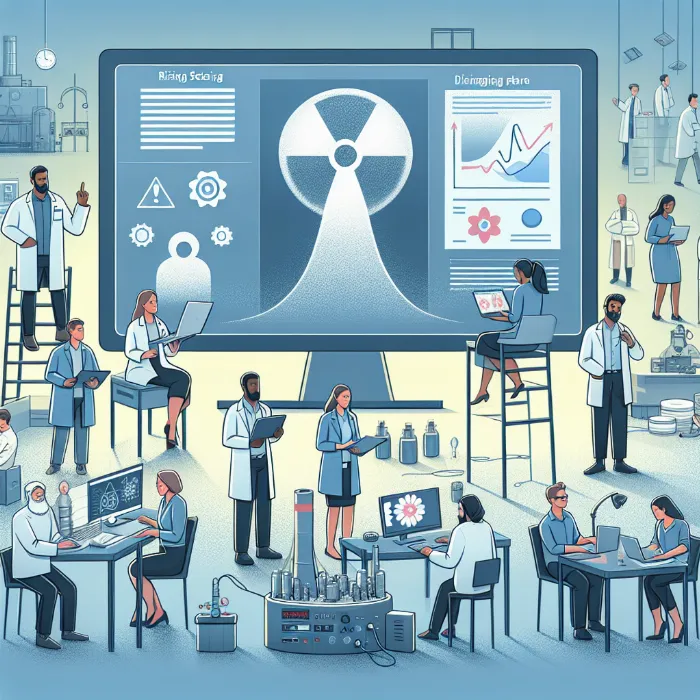
Türkiye’s innovation landscape has several notable features: a sizable population with a growing tertiary-educated cohort, a dynamic private sector presence in manufacturing and services, a rising technology startup scene, and strong domestic capabilities in defense, aerospace and telecommunications. At the same time, the country faces structural challenges in raising research intensity, boosting private-sector R&D, and retaining high-skilled talent.
Institutional players
- TÜBİTAK (The Scientific and Technological Research Council of Türkiye): The principal state agency coordinating research funding and science policy. See: https://tubitak.gov.tr/en.
- Ministries (Industry and Technology, Treasury and Finance, National Defense): Multiple ministries run programs and grants that shape incentives for industry and universities.
- Universities and research centers: Public and private universities are the primary producers of basic research and trained graduates.
- Private sector players: Large industrial groups, defense firms such as ASELSAN, Roketsan and Baykar, and an expanding start-up and scale-up ecosystem.
Key indicators and data trends
International agencies and national institutions track several indicators that describe Türkiye’s performance:
- R&D intensity (gross domestic expenditure on R&D as a share of GDP). International comparisons show Türkiye below the OECD average in R&D intensity, despite steady increases over past decades. For comparative data, see OECD R&D statistics: https://data.oecd.org/rd/gross-domestic-spending-on-r-d.htm.
- Business versus public R&D: In advanced innovation systems the private sector often accounts for the bulk of R&D spending. Türkiye has been working to increase private-sector R&D, but challenges remain. OECD analysis on business R&D dynamics: https://www.oecd.org/sti/.
- Human capital and researchers: Türkiye graduates large numbers of STEM students, and the research workforce has expanded. Nonetheless, researcher density and high-skill employment still lag behind peer high-income innovators.
- Patents and knowledge outputs: Patent filings, publications and citations have grown, yet Türkiye is still catching up to leading innovation economies in high-impact research outputs. For patent and innovation rankings, see WIPO and the Global Innovation Index: https://www.wipo.int/ and https://www.globalinnovationindex.org/.
Recent Progress: Signs of Momentum
Several developments point to real gains in Türkiye’s science and technology ecosystem:
- Defense and aerospace technology: Domestic firms have delivered advanced unmanned aerial systems, electronics and guided munitions that have attracted international attention. These advances are driven by sustained procurement, R&D partnerships and government-backed programs.
- Growing startup ecosystem: Turkish technology startups have shown capacity to raise international capital and produce high-growth companies. Notable exits and acquisitions in recent years brought attention to the ecosystem and encouraged venture capital activity.
- National programs: Strategic documents and roadmaps from public agencies emphasize commercialization, industry-university collaboration, and incentives for high-tech industries. TÃœBÄ°TAK and the Ministry of Industry and Technology publish programs aimed at boosting tech commercialization (TÃœBÄ°TAK).
- International collaboration: Türkiye participates in European research programs and bilateral partnerships, which provide access to funding, networks and collaborative research projects.
Structural Obstacles and Risk Factors
Despite momentum, policymakers and independent analysts regularly point to persistent barriers that could impede rapid progress:
1. Private-sector R&D engagement
In innovation-driven economies the private sector typically funds a large share of R&D. Türkiye’s private R&D share has improved but still needs expansion, particularly among SMEs. Financing constraints, short-termism driven by macroeconomic volatility, and limited access to patient capital constrain long-term corporate R&D investments.
2. Scale and commercialization
Translation of academic research into market-ready products requires incubators, technology transfer offices, and risk capital. While there are successful cases, systemic gaps remain in commercialization pipelines and in balancing basic research with applied, industry-relevant development.
3. Human capital and brain circulation
Turkey trains many engineers and scientists, but diaspora and outmigration of highly skilled workers, combined with competition from higher-pay markets, create retention challenges. Policies to incentivize return migration and to improve research career prospects domestically are central to long-term capability building.
4. Macroeconomic and policy consistency
Investments in R&D and technology require multi-year commitments. High inflation, exchange-rate volatility and budgetary constraints can erode the real value of public R&D funding and deter foreign and domestic private investment in risk-heavy technology projects.
Government Response: Tools and Initiatives
To address these issues, the Turkish government has rolled out a mix of programs, incentives and institutional changes. Key measures include:
- Direct grants and competitive funding: TÃœBÄ°TAK and other agencies run grants for university research, collaborative projects and start-ups.
- Tax incentives: R&D tax credits and incentives aim to encourage corporate R&D expenditure.
- Public procurement for technology: Government procurement can create demand for domestically developed technologies, particularly in defense and public infrastructure.
- Cluster policies: Support for technology parks, incubation hubs and public–private partnerships to facilitate knowledge transfer.
Official strategy documents and program descriptions are available at the Ministry of Industry and Technology: https://sanayi.gov.tr/ and TÜBİTAK’s website: https://tubitak.gov.tr/en.
Expert Perspectives
Institutional experts and international organizations emphasize that moving “up a league†requires sustained increases in both public and private R&D, better institutional frameworks and consistency in policy execution.
“To transform scientific capacity into broad-based economic gains, countries need to align incentives across universities, firms and financiers. Business R&D and technology diffusion are decisive,†said an overview from the OECD on national innovation systems. See OECD Science, Technology and Innovation resources: https://www.oecd.org/sti/.
TÜBİTAK’s mission statement highlights the need to “strengthen Turkey’s scientific capacity and to promote the conversion of scientific results into technological products.†For agency programs: https://tubitak.gov.tr/en.
Independent analysts note that Türkiye’s recent industrial successes, particularly in defense and aerospace, demonstrate how focused public demand and targeted support can foster rapid technological capability growth. International reporting on Turkish unmanned systems and defense exports provides context on how a concentrated sector can accelerate applied R&D (see major international outlets covering the sector).
Comparative Benchmarks
Comparisons with OECD peers illuminate the gap and the direction of travel:
Private Capital and Entrepreneurial Climate
Private risk capital — angel investors, venture capital, growth equity — is essential to scale technology firms. Türkiye’s startup funding environment has matured, but access to later-stage capital and the overall depth of venture markets remain areas for improvement.
Efforts to stimulate capital markets include:
- Regulatory reforms to attract venture capital and facilitate exits.
- Public co-investment or matching funds to de-risk early-stage investments and attract private investors.
- Support programs for scale-ups to help firms reach international markets.
Regional and Global Opportunities
Türkiye occupies a strategic geographic position bridging Europe, Asia and the Middle East, offering firms access to diverse markets. Integration with European research networks and participation in global value chains can accelerate technology transfer and market access for Turkish innovators. For companies seeking to internationalize, Türkiye’s location and domestic market size present advantages.
Policy Trade-offs and the Road Ahead
Ambitious innovation objectives require policy trade-offs and sequencing. Priorities include:
- Stabilizing macroeconomic conditions to protect the real value of R&D investments and encourage private capital commitments.
- Strengthening university–industry linkages to improve commercialization rates and applied research outcomes.
- Enhancing the quality of research and higher education to sustain long-term scientific excellence.
- Designing targeted incentives that address sector-specific bottlenecks — for instance, advanced manufacturing, semiconductors, biotechnology and digital infrastructure.
What Success Would Look Like
If Türkiye successfully "moves up a league," observable outcomes would include:
- Higher R&D intensity sustained over years, with a larger share from private firms.
- Greater global presence of Turkish technology companies, through exports, partnerships and acquisitions.
- Improved placement of Turkish institutions and firms in international innovation rankings and patent portfolios.
- Better career prospects and retention for STEM graduates and researchers within Türkiye.
Risks to Monitor
Key risks include policy inconsistency, insufficient access to patient capital, skill mismatches in the labor market, and external shocks that reduce fiscal space for strategic investments. Monitoring and mitigating these risks will be essential if Türkiye is to sustain a transition into higher-value technology production.
Sources and Further Reading
Conclusion
President Erdoğan’s statement that Türkiye will "move up to a higher league in science and technology" captures an aspirational policy goal that aligns with a broader government strategy to promote high-tech industry, defense and aerospace capabilities, and an expanding entrepreneurial ecosystem. The country has demonstrable strengths and momentum in several sectors, yet substantial structural challenges persist. Achieving sustained advancement will depend on bolstering private-sector R&D, improving commercialization pathways from universities, stabilizing macroeconomic conditions to protect long-term investments, and deepening access to patient capital.
Policy coherence, long-term funding commitments, and a focus on human capital and institutional capacity will determine whether Türkiye can convert political ambition into measurable gains in innovation performance. Institutional players such as TÜBİTAK, ministries, universities and private industry will need to coordinate across multiple fronts if the nation is to realize the kinds of productivity gains and technological sovereignty that the government envisions.
Disclaimer: This article is based on publicly available information and does not represent investment or legal advice.
















Comments 0